Yep, we may get a tiny thank-you (read: commission) when you buy through
links on Gadgetspotr — not enough for a yacht, but enough to keep the lights (and
servers) on.
Learn more
30
Highlights
50
Differences
10
Reactions
0
Likes
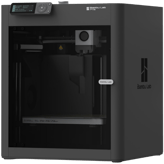
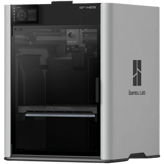
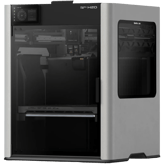
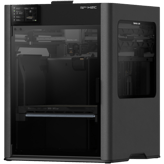
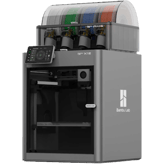
Bambu Lab P1P
vs
Bambu Lab A1 Mini:
30 Highlights & 50 Differences —
So, Which 3D Printer Actually Works Better
Don't know which Bambu Lab printer to get? We look at build size, material support, and noise levels. Find out if the P1P's power or the A1 Mini's charm wins out for you.
Gadget showdown: Bambu Lab P1P vs Bambu Lab A1 Mini — see how they match up in performance, features, and vibration sensor, print log storage, remote error alerts & predictive failure logs.
Bambu Lab P1P vs. A1 Mini: Compact Power Meets Versatile Performance
The Bambu Lab P1P and A1 Mini are both cutting-edge FDM/FFF 3D printers designed for a range of users from beginners to professionals, targeting educational, consumer, and prototyping needs. Both arrive prebuilt with similar user levels and warranty support, providing convenient plug-and-play experiences paired with modern features like auto bed leveling and filament monitoring. Nonetheless, each machine caters to different demands: the P1P offers a larger build volume and higher power consumption suited for advanced multi-material printing, while the A1 Mini prioritizes a smaller footprint and energy efficiency for compact, budget-conscious setups. These distinctions shape the user experience and performance, reflected in their contrasting build sizes, material compatibility, and motion system architectures.
Elevated Versatility and Precision: The Bambu Lab P1P's Strengths
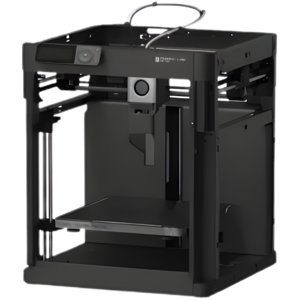
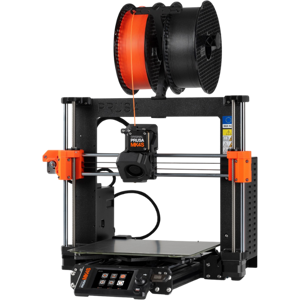
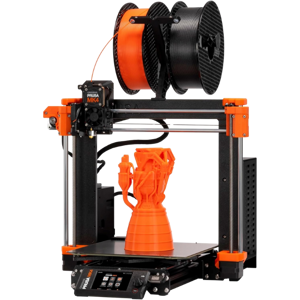
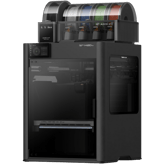
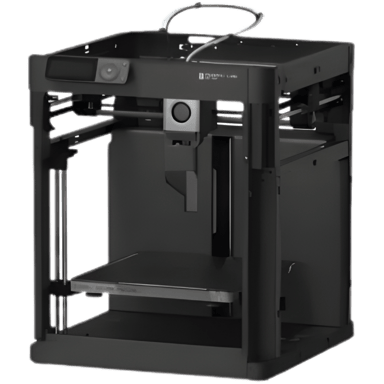
When it comes to managing larger, complex projects, the Bambu Lab P1P shines brightly. Its substantial 10.08-inch cube build volume presents nearly three times the printing space of the smaller A1 Mini, enabling users to create bigger prototypes and parts effortlessly. The P1P's CoreXY frame type ensures swift and precise movements, boosting print speed up to an official max of 500 mm/s with a typical effective speed around 300 mm/s. Complementing this high-performance mechanical structure is a powerful 1000W internal power supply supporting a maximum extruder temperature of 572°F and a heated bed reaching up to 212°F. This thermal capability widens the range of compatible materials to include engineering-grade filaments like Nylon, Carbon Fiber composites, PC, and ASA, in addition to common PLA and ABS. Its multi-material support extends to four materials simultaneously via an optional upgrade path, enhanced by features such as a filament dry box and auto-loader.
The P1P is built with professional convenience and control in mind. It includes a built-in camera for remote monitoring and time-lapse recording, a removable textured magnetic PEI build plate for easy part retrieval, and quick-swap nozzles that empower rapid filament or nozzle diameter changes. Its intelligent sensors, like filament runout and vibration detection, combined with predictive cost estimation and detailed usage dashboards, cater to print farm management and extensive workflow integration. Overall, the P1P embodies versatility and robustness, tailored for demanding professional workflows, educational labs, and consumers aiming for multi-material mastery.
Compact Convenience and Affordability: Why the Bambu Lab A1 Mini Excels
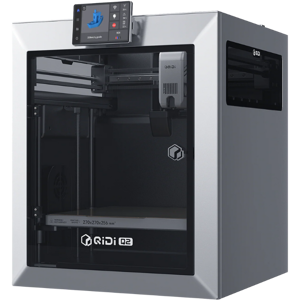
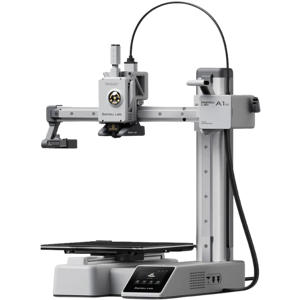
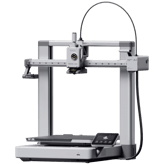
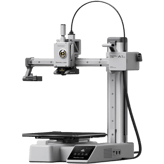
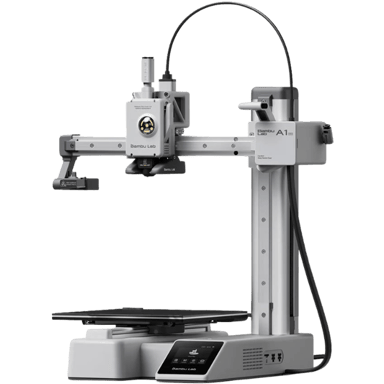
In contrast, the Bambu Lab A1 Mini targets users who value space-saving design without sacrificing essential features. It's significantly smaller, with a 7.09-inch cubic build volume that perfectly suits miniature models, prototypes, and educational projects. The A1 Mini uses a Cartesian motion system with precision linear rails, providing steady, reliable printing optimized for materials like PLA, PETG, TPU, and PVA. Although it supports fewer filament types compared to the P1P, it maintains quality with a maximum print accuracy of 100% and layered resolution beginning as low as 40 microns.
This model prioritizes accessibility and efficiency. It consumes far less power, drawing just 150W during operation with an energy-saving mode to reduce idle consumption to 10W, making it ideal for environments with limited electricity resources or noise concerns. Its quieter operation at 48 dB and smaller dimensions (approximately 12.4 × 13.7 × 14.37 inches) ensure a minimal desktop footprint and low noise disturbance. The touchscreen interface offers intuitive setup and control, complemented by cloud-based software and remote monitoring. Additionally, it incorporates safety features like overheat protection and an emergency stop button for outstanding user peace of mind. The A1 Mini's moderate price point adds exceptional value for beginners and educators focused on learning and smaller builds.
Quick Take of Bambu Lab P1P vs A1 Mini
The Bambu Lab P1P brings broad material compatibility, larger build capacity, and superior speed with its CoreXY system, suited for versatile, professional applications. Meanwhile, the A1 Mini offers an approachable, compact footprint with quieter, energy-efficient operation and all the fundamental features necessary for educational use, prototyping, and hobbyist printing, at a more wallet-friendly price.
Bottom Line
For users who need a robust machine capable of handling diverse filaments and larger-scale prints, the Bambu Lab P1P is the clear winner. Its advanced technology stack, larger volume, and multi-material support make it ideal for those seeking professional-grade quality and flexibility. On the other hand, the Bambu Lab A1 Mini serves perfectly as an affordable, space-conscious solution for beginners or users focusing on smaller projects, delivering reliable performance with lower costs and energy consumption.
Verdict
Winner: Bambu Lab P1P - Superior build size, material options, and pro-level features make it the best all-around choice for serious makers and educators.
Runner-up: Bambu Lab A1 Mini - Compact, quiet, and budget-friendly, it's excellent for smaller prints and educational environments with limited power or space.
Side by side. The numbers. The features. No drama.
This side-by-side 3d printers review of Bambu Lab P1P vs Bambu Lab A1 Mini is packed with useful info — specs, standout features, and real user takes.
The printer is Prebuilt, meaning it comes fully assembled and ready to use out of the box, simplifying the setup process for users.
Bambu Lab A1 Mini
The A1 Mini is a Prebuilt printer, meaning it requires minimal assembly out of the box. This allows users to start printing quickly with less setup time.
Shows whether the printer is sold as a kit requiring assembly or fully prebuilt.
In the battle of Assembly Type,
Bambu Lab P1P ◉ is
same as
Bambu Lab A1 Mini ◉
.
Don’t keep it to yourself — be the first to react and review the
Assembly Type on Bambu Lab P1P ◉
vs Bambu Lab A1 Mini ◉ and help others decide!
The Release Year for Bambu Lab P1P is 2022, while Bambu Lab A1 Mini was released in 2023, making the A1 Mini a newer model. Users seeking the latest generation may prefer the A1 Mini.
The year the 3D printer was first released.
In the battle of Release Year,
Bambu Lab P1P ◉ is
same as
Bambu Lab A1 Mini ◉
.
Don’t keep it to yourself — be the first to react and review the
Release Year on Bambu Lab P1P ◉
vs Bambu Lab A1 Mini ◉ and help others decide!
Regarding Intended Use, Bambu Lab P1P is suited for Consumer, Professional, and Educational users, while Bambu Lab A1 Mini targets Consumer and Educational users. Professionals needing a broader application range might find the P1P more versatile.
Identifies the main user category.
In the battle of Intended Use,
Bambu Lab P1P ◉ is
same as
Bambu Lab A1 Mini ◉
.
Don’t keep it to yourself — be the first to react and review the
Intended Use on Bambu Lab P1P ◉
vs Bambu Lab A1 Mini ◉ and help others decide!
0
Bambu Lab A1 Mini
0Votes
Prototyping, Miniatures, Educational
Lists the most common applications supported.
In the battle of Supported Applications,
Bambu Lab P1P ◉ is
same as
Bambu Lab A1 Mini ◉
.
Don’t keep it to yourself — be the first to react and review the
Supported Applications on Bambu Lab P1P ◉
vs Bambu Lab A1 Mini ◉ and help others decide!
The Depth of Bambu Lab P1P is 15.31 inches (38.89 cm), compared to Bambu Lab A1 Mini's 13.7 inches (34.8 cm). The A1 Mini has a shallower footprint, making it suitable for tighter desk spaces.
The total external depth of the printer.
In the battle of Depth,
Bambu Lab P1P ◉ is
worse than
Bambu Lab A1 Mini ◉
, delivering
higher
1.6 inch
measurement.
Don’t keep it to yourself — be the first to react and review the
Depth on Bambu Lab P1P ◉
vs Bambu Lab A1 Mini ◉ and help others decide!
Bambu Lab P1P's Package Height is 20.87 inches (53.01 cm), and Bambu Lab A1 Mini's is 17.32 inches (44 cm). The A1 Mini's smaller package height may make it easier to store before setup.
Height of the printer’s packaging.
In the battle of Package Height,
Bambu Lab P1P ◉ is
worse than
Bambu Lab A1 Mini ◉
, delivering
higher
3.6 inch
measurement.
Don’t keep it to yourself — be the first to react and review the
Package Height on Bambu Lab P1P ◉
vs Bambu Lab A1 Mini ◉ and help others decide!
Bambu Lab P1P requires 1.64 sq ft (0.15 m²) of space, while Bambu Lab A1 Mini needs 1.18 sq ft (0.11 m²). The A1 Mini is better for those with limited space, requiring 0.46 sq ft (0.04 m²) less.
The minimum flat surface area needed to safely place the printer.
In the battle of Space Requirement,
Bambu Lab P1P ◉ is
worse than
Bambu Lab A1 Mini ◉
, delivering
higher
0.5 sq ft
measurement.
Based on community votes for Space Requirement,
Bambu Lab P1P ◉ earned
0 votes,
less than
Bambu Lab A1 Mini ◉,
which got 1 votes.
Bambu Lab P1P stands at a Height of 18.03 inches (45.79 cm), while Bambu Lab A1 Mini is 14.37 inches (36.5 cm) tall. The A1 Mini's lower profile allows it to fit into more confined vertical spaces.
The total external height of the printer.
In the battle of Height,
Bambu Lab P1P ◉ is
worse than
Bambu Lab A1 Mini ◉
, delivering
higher
3.7 inch
measurement.
Don’t keep it to yourself — be the first to react and review the
Height on Bambu Lab P1P ◉
vs Bambu Lab A1 Mini ◉ and help others decide!
Bambu Lab P1P weighs 21.36 lbs (9.69 kg), which is considerably heavier than Bambu Lab A1 Mini at 12.13 lbs (5.5 kg). The A1 Mini is significantly lighter by 9.23 lbs (4.19 kg), making it much easier to move or transport.
Net weight of the printer.
In the battle of Weight,
Bambu Lab P1P ◉ is
worse than
Bambu Lab A1 Mini ◉
, delivering
higher
9.2 lbs
measurement.
Don’t keep it to yourself — be the first to react and review the
Weight on Bambu Lab P1P ◉
vs Bambu Lab A1 Mini ◉ and help others decide!
Bambu Lab P1P comes in a Package Width of 19.09 inches (48.49 cm), whereas Bambu Lab A1 Mini has a package width of 15.35 inches (38.99 cm). The A1 Mini's smaller package might be easier to handle and store upon delivery.
Width of the printer’s packaging.
In the battle of Package Width,
Bambu Lab P1P ◉ is
worse than
Bambu Lab A1 Mini ◉
, delivering
higher
3.7 inch
measurement.
Don’t keep it to yourself — be the first to react and review the
Package Width on Bambu Lab P1P ◉
vs Bambu Lab A1 Mini ◉ and help others decide!
The Package Depth for Bambu Lab P1P is 18.31 inches (46.51 cm), while Bambu Lab A1 Mini's is 18.11 inches (46 cm). Both printers have similar package depths.
Depth of the printer’s packaging.
In the battle of Package Depth,
Bambu Lab P1P ◉ is
worse than
Bambu Lab A1 Mini ◉
, delivering
higher
0.2 inch
measurement.
Don’t keep it to yourself — be the first to react and review the
Package Depth on Bambu Lab P1P ◉
vs Bambu Lab A1 Mini ◉ and help others decide!
Bambu Lab P1P has a Package Weight of 31.53 lbs (14.3 kg), which is heavier than Bambu Lab A1 Mini's 18.08 lbs (8.2 kg). The A1 Mini's lighter package is easier for unpacking and initial setup.
total shipping weight including packaging.
In the battle of Package Weight,
Bambu Lab P1P ◉ is
worse than
Bambu Lab A1 Mini ◉
, delivering
higher
13.5 lbs
measurement.
Don’t keep it to yourself — be the first to react and review the
Package Weight on Bambu Lab P1P ◉
vs Bambu Lab A1 Mini ◉ and help others decide!
Bambu Lab P1P has a Width of 15.31 inches (38.89 cm), which is larger than Bambu Lab A1 Mini's 12.4 inches (31.5 cm). The A1 Mini is more compact, saving 2.91 inches (7.39 cm) in width, ideal for smaller workspaces.
The total external width of the printer.
In the battle of Width,
Bambu Lab P1P ◉ is
worse than
Bambu Lab A1 Mini ◉
, delivering
higher
2.9 inch
measurement.
Don’t keep it to yourself — be the first to react and review the
Width on Bambu Lab P1P ◉
vs Bambu Lab A1 Mini ◉ and help others decide!
The Build-to-Printer Size Ratio for Bambu Lab P1P is 24.3%, indicating a more efficient use of its overall footprint for print volume, compared to Bambu Lab A1 Mini's 14.6%. Users prioritizing larger print capacity relative to printer size may favor the P1P.
The efficiency ratio of build volume relative to the overall printer size.
In the battle of Build-to-Printer Size Ratio,
Bambu Lab P1P ◉ is
better than
Bambu Lab A1 Mini ◉
, delivering
higher
9.7 %
measurement.
Don’t keep it to yourself — be the first to react and review the
Build-to-Printer Size Ratio on Bambu Lab P1P ◉
vs Bambu Lab A1 Mini ◉ and help others decide!
The power supply accepts a universal input voltage range of 100-240 Volt, making it compatible with electrical grids worldwide.
Voltage input supported by the printer’s power supply.
In the battle of Power Supply Voltage,
Bambu Lab P1P ◉ is
same as
Bambu Lab A1 Mini ◉
.
Don’t keep it to yourself — be the first to react and review the
Power Supply Voltage on Bambu Lab P1P ◉
vs Bambu Lab A1 Mini ◉ and help others decide!
Bambu Lab P1P has a Power Consumption of 1000 Watt, significantly higher than Bambu Lab A1 Mini's 150 Watt. The A1 Mini is much more energy-efficient, potentially leading to lower operating costs.
Average power usage during active printing.
In the battle of Power Consumption,
Bambu Lab P1P ◉ is
worse than
Bambu Lab A1 Mini ◉
, delivering
higher
850.0 Watt
measurement.
Based on community votes for Power Consumption,
Bambu Lab P1P ◉ earned
0 votes,
less than
Bambu Lab A1 Mini ◉,
which got 1 votes.
Recommended ambient temperature range for safe operation.
In the battle of Operating Temperature Range,
Bambu Lab P1P ◉ is
same as
Bambu Lab A1 Mini ◉
.
Don’t keep it to yourself — be the first to react and review the
Operating Temperature Range on Bambu Lab P1P ◉
vs Bambu Lab A1 Mini ◉ and help others decide!
Safe temperature range for storing the printer when not in use.
In the battle of Storage Temperature Range,
Bambu Lab P1P ◉ is
same as
Bambu Lab A1 Mini ◉
.
Don’t keep it to yourself — be the first to react and review the
Storage Temperature Range on Bambu Lab P1P ◉
vs Bambu Lab A1 Mini ◉ and help others decide!
Acceptable humidity range during printer operation.
In the battle of Operating Humidity Range,
Bambu Lab P1P ◉ is
same as
Bambu Lab A1 Mini ◉
.
Don’t keep it to yourself — be the first to react and review the
Operating Humidity Range on Bambu Lab P1P ◉
vs Bambu Lab A1 Mini ◉ and help others decide!
In the battle of Storage Humidity Range,
Bambu Lab P1P ◉ is
same as
Bambu Lab A1 Mini ◉
.
Don’t keep it to yourself — be the first to react and review the
Storage Humidity Range on Bambu Lab P1P ◉
vs Bambu Lab A1 Mini ◉ and help others decide!
Bambu Lab P1P features an Internal Power Supply Type, whereas Bambu Lab A1 Mini utilizes an External Power Supply. An internal power supply often results in a cleaner setup with fewer visible cables.
Indicates whether the printer uses an internal or external power supply.
In the battle of Power Supply Type,
Bambu Lab P1P ◉ is
same as
Bambu Lab A1 Mini ◉
.
Don’t keep it to yourself — be the first to react and review the
Power Supply Type on Bambu Lab P1P ◉
vs Bambu Lab A1 Mini ◉ and help others decide!
Who knows?
0Votes
Bambu Lab P1P
(Help us out by suggesting one!)
10
Watt
0Votes
vs
Idle Power Consumption
Bambu Lab P1P does not specify its Idle Power Consumption, while Bambu Lab A1 Mini has an idle consumption of 10 Watt. The A1 Mini provides clarity on its low power usage when not actively printing.
Power drawn while the printer is on but not printing.
Don’t keep it to yourself — be the first to react and review the
Idle Power Consumption on Bambu Lab P1P ◉
vs Bambu Lab A1 Mini ◉ and help others decide!
Bambu Lab P1P does not specify an Energy Saving Mode, but Bambu Lab A1 Mini explicitly offers one. The A1 Mini's energy-saving feature can help reduce power consumption during periods of inactivity.
Whether the printer includes an energy-saving or eco mode.
In the battle of Energy Saving Mode,
Bambu Lab P1P ◉ is
worse than
Bambu Lab A1 Mini ◉
.
Don’t keep it to yourself — be the first to react and review the
Energy Saving Mode on Bambu Lab P1P ◉
vs Bambu Lab A1 Mini ◉ and help others decide!
The printer is designed to use 1.75 mm diameter filament, which is a standard size for most FDM 3D printers, ensuring broad material compatibility.
Bambu Lab A1 Mini
The printer is designed to use filament with a standard diameter of 1.75 mm, common across many FDM 3D printers.
The filament size compatible with printer.
In the battle of Filament Diameter Supported,
Bambu Lab P1P ◉ is
same as
Bambu Lab A1 Mini ◉
, delivering
equal
1.75 mm
measurement.
Don’t keep it to yourself — be the first to react and review the
Filament Diameter Supported on Bambu Lab P1P ◉
vs Bambu Lab A1 Mini ◉ and help others decide!
Bambu Lab P1P offers a Max Bed Temperature of 212°F (100°C), higher than Bambu Lab A1 Mini's 176°F (80°C). A higher bed temperature on the P1P is beneficial for printing materials like ABS or ASA, which require better adhesion and warp prevention.
Maximum heated bed temperature.
In the battle of Max Bed Temperature,
Bambu Lab P1P ◉ is
better than
Bambu Lab A1 Mini ◉
, delivering
higher
36.0 °F
measurement.
Based on community votes for Max Bed Temperature,
Bambu Lab P1P ◉ earned
1 votes,
more than
Bambu Lab A1 Mini ◉,
which got 0 votes.
Bambu Lab P1P provides a Build Depth of 10.08 inches (25.6 cm), exceeding Bambu Lab A1 Mini's 7.09 inches (18 cm). The P1P is suitable for printing deeper parts or multiple smaller items.
Maximum printable depth of the build area.
In the battle of Build Depth,
Bambu Lab P1P ◉ is
better than
Bambu Lab A1 Mini ◉
, delivering
higher
3.0 inch
measurement.
Don’t keep it to yourself — be the first to react and review the
Build Depth on Bambu Lab P1P ◉
vs Bambu Lab A1 Mini ◉ and help others decide!
The Build Height for Bambu Lab P1P is 10.08 inches (25.6 cm), while Bambu Lab A1 Mini has a build height of 7.09 inches (18 cm). The P1P offers more vertical printing space for taller models.
Maximum printable height of the build area.
In the battle of Build Height,
Bambu Lab P1P ◉ is
better than
Bambu Lab A1 Mini ◉
, delivering
higher
3.0 inch
measurement.
Don’t keep it to yourself — be the first to react and review the
Build Height on Bambu Lab P1P ◉
vs Bambu Lab A1 Mini ◉ and help others decide!
The printer comes with a standard nozzle diameter of 0.4 mm. This size is suitable for a wide range of common 3D printing applications, balancing speed and detail.
Default nozzle diameter provided.
In the battle of Standard Nozzle Diameter,
Bambu Lab P1P ◉ is
same as
Bambu Lab A1 Mini ◉
, delivering
equal
0.40 mm
measurement.
Don’t keep it to yourself — be the first to react and review the
Standard Nozzle Diameter on Bambu Lab P1P ◉
vs Bambu Lab A1 Mini ◉ and help others decide!
0
Bambu Lab A1 Mini
0Votes
0.2mm, 0.4mm, 0.6mm, 0.8mm
vs
Optional Nozzle Sizes
For Optional Nozzle Sizes, Bambu Lab P1P lists 0.2mm, 0.6mm, 0.8mm, while Bambu Lab A1 Mini includes 0.2mm, 0.4mm, 0.6mm, 0.8mm. The A1 Mini explicitly lists 0.4mm as an optional size, which is commonly used.
Alternative nozzle sizes supported.
In the battle of Optional Nozzle Sizes,
Bambu Lab P1P ◉ is
same as
Bambu Lab A1 Mini ◉
.
Don’t keep it to yourself — be the first to react and review the
Optional Nozzle Sizes on Bambu Lab P1P ◉
vs Bambu Lab A1 Mini ◉ and help others decide!
The capability for quick-swap nozzles allows for fast and easy changes between different nozzle sizes or types, improving efficiency and versatility for various printing needs.
Nozzles can be quickly swapped without tools.
In the battle of Quick-Swap Nozzles,
Bambu Lab P1P ◉ is
same as
Bambu Lab A1 Mini ◉
.
Don’t keep it to yourself — be the first to react and review the
Quick-Swap Nozzles on Bambu Lab P1P ◉
vs Bambu Lab A1 Mini ◉ and help others decide!
Bambu Lab A1 Mini offers a finer Layer Resolution Minimum of 40 microns, compared to Bambu Lab P1P's 50 microns. The A1 Mini can produce prints with slightly more detailed vertical resolution.
Finest layer height achievable.
In the battle of Layer Resolution Minimum,
Bambu Lab P1P ◉ is
worse than
Bambu Lab A1 Mini ◉
, delivering
higher
10.0 microns
measurement.
Don’t keep it to yourself — be the first to react and review the
Layer Resolution Minimum on Bambu Lab P1P ◉
vs Bambu Lab A1 Mini ◉ and help others decide!
Bambu Lab P1P supports a Layer Resolution Maximum of 350 microns, slightly higher than Bambu Lab A1 Mini's 320 microns. The P1P allows for slightly thicker layers, potentially useful for faster, rougher prints.
Thickest layer height achievable.
In the battle of Layer Resolution Maximum,
Bambu Lab P1P ◉ is
better than
Bambu Lab A1 Mini ◉
, delivering
higher
30.0 microns
measurement.
Don’t keep it to yourself — be the first to react and review the
Layer Resolution Maximum on Bambu Lab P1P ◉
vs Bambu Lab A1 Mini ◉ and help others decide!
In the battle of Max Extruder Temperature,
Bambu Lab P1P ◉ is
same as
Bambu Lab A1 Mini ◉
, delivering
equal
572.00 °F
measurement.
Don’t keep it to yourself — be the first to react and review the
Max Extruder Temperature on Bambu Lab P1P ◉
vs Bambu Lab A1 Mini ◉ and help others decide!
Bambu Lab P1P has a Min Extruder Temperature of 32°F (0°C), much lower than Bambu Lab A1 Mini's 356°F (180°C). The P1P supports a wider operational temperature range for the extruder.
Lowest operable extruder temperature.
In the battle of Min Extruder Temperature,
Bambu Lab P1P ◉ is
better than
Bambu Lab A1 Mini ◉
, delivering
lower
324.0 °F
measurement.
Don’t keep it to yourself — be the first to react and review the
Min Extruder Temperature on Bambu Lab P1P ◉
vs Bambu Lab A1 Mini ◉ and help others decide!
Who knows?
0Votes
Bambu Lab P1P
(Help us out by suggesting one!)
Who knows?
0Votes
Bambu Lab A1 Mini
(Help us out by suggesting one!)
Variance in heat across the bed surface.
Don’t keep it to yourself — be the first to react and review the
Bed Temperature Gradient on Bambu Lab P1P ◉
vs Bambu Lab A1 Mini ◉ and help others decide!
Who knows?
0Votes
Bambu Lab P1P
(Help us out by suggesting one!)
Who knows?
0Votes
Bambu Lab A1 Mini
(Help us out by suggesting one!)
Range of temperatures the printer chamber can maintain
Don’t keep it to yourself — be the first to react and review the
Chamber Temperature Control Range on Bambu Lab P1P ◉
vs Bambu Lab A1 Mini ◉ and help others decide!
Whether the printer supports independent extruder heads.
In the battle of Independent Dual Extruder,
Bambu Lab P1P ◉ is
same as
Bambu Lab A1 Mini ◉
.
Don’t keep it to yourself — be the first to react and review the
Independent Dual Extruder on Bambu Lab P1P ◉
vs Bambu Lab A1 Mini ◉ and help others decide!
In the battle of Extruder Drive Type,
Bambu Lab P1P ◉ is
same as
Bambu Lab A1 Mini ◉
.
Don’t keep it to yourself — be the first to react and review the
Extruder Drive Type on Bambu Lab P1P ◉
vs Bambu Lab A1 Mini ◉ and help others decide!
Build Width
What is the build width?
10.08
inch
0Votes
7.09
inch
0Votes
vs
Build Width
The Build Width of Bambu Lab P1P is 10.08 inches (25.6 cm), which is substantially wider than Bambu Lab A1 Mini's 7.09 inches (18 cm). The P1P offers a larger print area for wider objects.
Maximum printable width of the build area.
In the battle of Build Width,
Bambu Lab P1P ◉ is
better than
Bambu Lab A1 Mini ◉
, delivering
higher
3.0 inch
measurement.
Don’t keep it to yourself — be the first to react and review the
Build Width on Bambu Lab P1P ◉
vs Bambu Lab A1 Mini ◉ and help others decide!
Bambu Lab P1P supports a wider range of Supported Filament Types including PLA, ABS, PETG, Nylon, TPU, Carbon Fiber, PVA, PA, PC, ASA, whereas Bambu Lab A1 Mini supports PLA, PETG, TPU, PVA. The P1P is better for users working with advanced engineering filaments.
Filament materials that the printer can process.
In the battle of Supported Filament Types,
Bambu Lab P1P ◉ is
same as
Bambu Lab A1 Mini ◉
.
Based on community votes for Supported Filament Types,
Bambu Lab P1P ◉ earned
1 votes,
more than
Bambu Lab A1 Mini ◉,
which got 0 votes.
What is the maximum number of materials supported?
0
Bambu Lab P1P
0Votes
4
0
Bambu Lab A1 Mini
0Votes
4
vs
Max Number of Materials Supported
Both Bambu Lab P1P and Bambu Lab A1 Mini support a Max Number of Materials Supported of 4. This allows both printers to handle multi-color or multi-material prints with up to four different filaments.
Maximum distinct materials supported in one job.
In the battle of Max Number of Materials Supported,
Bambu Lab P1P ◉ is
same as
Bambu Lab A1 Mini ◉
.
Don’t keep it to yourself — be the first to react and review the
Max Number of Materials Supported on Bambu Lab P1P ◉
vs Bambu Lab A1 Mini ◉ and help others decide!
The printer supports third-party material, providing users with flexibility in filament choices beyond Bambu Lab's own offerings.
Ability to use non-proprietary materials.
In the battle of Third-Party Material,
Bambu Lab P1P ◉ is
same as
Bambu Lab A1 Mini ◉
.
Don’t keep it to yourself — be the first to react and review the
Third-Party Material on Bambu Lab P1P ◉
vs Bambu Lab A1 Mini ◉ and help others decide!
As an FDM/FFF printer, the Bambu Lab A1 Mini does not support resin types. Therefore, the value for supported resin types is None.
Resin types that the printer can use.
In the battle of Supported Resin Types,
Bambu Lab P1P ◉ is
same as
Bambu Lab A1 Mini ◉
.
Don’t keep it to yourself — be the first to react and review the
Supported Resin Types on Bambu Lab P1P ◉
vs Bambu Lab A1 Mini ◉ and help others decide!
Bambu Lab P1P supports Multi-Material Printing, whereas this feature is not applicable for Bambu Lab A1 Mini based on the provided data. The P1P is suitable for users looking to print with multiple colors or materials in a single job.
Ability to print with multiple materials simultaneously.
In the battle of Multi-Material Printing,
Bambu Lab P1P ◉ is
better than
Bambu Lab A1 Mini ◉
.
Based on community votes for Multi-Material Printing,
Bambu Lab P1P ◉ earned
1 votes,
more than
Bambu Lab A1 Mini ◉,
which got 0 votes.
In the battle of Filament Auto-Loading,
Bambu Lab P1P ◉ is
same as
Bambu Lab A1 Mini ◉
.
Don’t keep it to yourself — be the first to react and review the
Filament Auto-Loading on Bambu Lab P1P ◉
vs Bambu Lab A1 Mini ◉ and help others decide!
In the battle of Filament Drying Required,
Bambu Lab P1P ◉ is
same as
Bambu Lab A1 Mini ◉
.
Don’t keep it to yourself — be the first to react and review the
Filament Drying Required on Bambu Lab P1P ◉
vs Bambu Lab A1 Mini ◉ and help others decide!
Who knows?
0Votes
Bambu Lab P1P
(Help us out by suggesting one!)
Who knows?
0Votes
Bambu Lab A1 Mini
(Help us out by suggesting one!)
Light wavelength compatibility for curing resins.
Don’t keep it to yourself — be the first to react and review the
Compatible Resin Wavelength on Bambu Lab P1P ◉
vs Bambu Lab A1 Mini ◉ and help others decide!
Who knows?
0Votes
Bambu Lab P1P
(Help us out by suggesting one!)
Who knows?
0Votes
Bambu Lab A1 Mini
(Help us out by suggesting one!)
Maximum amount of resin the tank can hold.
Don’t keep it to yourself — be the first to react and review the
Max Resin Tank Capacity on Bambu Lab P1P ◉
vs Bambu Lab A1 Mini ◉ and help others decide!
Supports resins/filaments approved for medical or dental use.
In the battle of Biocompatible Materials Support,
Bambu Lab P1P ◉ is
same as
Bambu Lab A1 Mini ◉
.
Don’t keep it to yourself — be the first to react and review the
Biocompatible Materials Support on Bambu Lab P1P ◉
vs Bambu Lab A1 Mini ◉ and help others decide!
Max Supported Filament Diameter
What is the maximum supported filament diameter?
1.75
mm
0Votes
1.75
mm
0Votes
Maximum filament diameter that can be used.
In the battle of Max Supported Filament Diameter,
Bambu Lab P1P ◉ is
same as
Bambu Lab A1 Mini ◉
, delivering
equal
1.75 mm
measurement.
Don’t keep it to yourself — be the first to react and review the
Max Supported Filament Diameter on Bambu Lab P1P ◉
vs Bambu Lab A1 Mini ◉ and help others decide!
Bambu Lab P1P has an Operating Noise Level of 50 dB, slightly higher than Bambu Lab A1 Mini's 48 dB. The A1 Mini operates 2 dB quieter, which can contribute to a more pleasant environment in quiet workspaces.
Measures the sound generated during printing; lower is quieter.
In the battle of Operating Noise Level,
Bambu Lab P1P ◉ is
worse than
Bambu Lab A1 Mini ◉
, delivering
higher
2.0 dB
measurement.
Based on community votes for Operating Noise Level,
Bambu Lab P1P ◉ earned
0 votes,
less than
Bambu Lab A1 Mini ◉,
which got 1 votes.
The A1 Mini boasts an official maximum print speed of 500 mm/s. This allows for incredibly fast print completion, significantly reducing overall print times.
Manufacturer-claimed maximum print speed.
In the battle of Official Max Print Speed,
Bambu Lab P1P ◉ is
same as
Bambu Lab A1 Mini ◉
, delivering
equal
500.00 mm/s
measurement.
Don’t keep it to yourself — be the first to react and review the
Official Max Print Speed on Bambu Lab P1P ◉
vs Bambu Lab A1 Mini ◉ and help others decide!
The Auto first layer calibration ensures optimal print quality by automatically adjusting the Z-offset for perfect bed adhesion, simplifying the setup process.
Method used for first-layer bed calibration.
In the battle of First Layer Calibration,
Bambu Lab P1P ◉ is
same as
Bambu Lab A1 Mini ◉
.
Don’t keep it to yourself — be the first to react and review the
First Layer Calibration on Bambu Lab P1P ◉
vs Bambu Lab A1 Mini ◉ and help others decide!
The printer features spaghetti and fault detection, which can identify print failures early and automatically pause the print.
Detects failed prints or filament tangles.
In the battle of Spaghetti/Fault Detection,
Bambu Lab P1P ◉ is
same as
Bambu Lab A1 Mini ◉
.
Don’t keep it to yourself — be the first to react and review the
Spaghetti/Fault Detection on Bambu Lab P1P ◉
vs Bambu Lab A1 Mini ◉ and help others decide!
Bambu Lab P1P takes 16 minutes to print a Benchy, which is 2 minutes faster than Bambu Lab A1 Mini's 18 minutes. For users prioritizing speed on common benchmark prints, the P1P offers a slight advantage.
Average time to complete the benchmark “Benchy” model.
In the battle of Time to Print Benchy,
Bambu Lab P1P ◉ is
better than
Bambu Lab A1 Mini ◉
, delivering
lower
2.0 minutes
measurement.
Based on community votes for Time to Print Benchy,
Bambu Lab P1P ◉ earned
1 votes,
more than
Bambu Lab A1 Mini ◉,
which got 0 votes.
In the battle of Measured Effective Print Speed,
Bambu Lab P1P ◉ is
same as
Bambu Lab A1 Mini ◉
, delivering
equal
300.00 mm/s
measurement.
Don’t keep it to yourself — be the first to react and review the
Measured Effective Print Speed on Bambu Lab P1P ◉
vs Bambu Lab A1 Mini ◉ and help others decide!
Who knows?
0Votes
Bambu Lab P1P
(Help us out by suggesting one!)
Who knows?
0Votes
Bambu Lab A1 Mini
(Help us out by suggesting one!)
Longest unsupported horizontal span printed without sagging.
Don’t keep it to yourself — be the first to react and review the
Bridging Performance on Bambu Lab P1P ◉
vs Bambu Lab A1 Mini ◉ and help others decide!
Who knows?
0Votes
Bambu Lab P1P
(Help us out by suggesting one!)
60
degrees
0Votes
vs
Overhang Performance
Bambu Lab P1P does not specify its Overhang Performance, while Bambu Lab A1 Mini achieves 60 degrees. The A1 Mini provides a measurable metric for its overhang capabilities.
Maximum angle of unsupported overhangs achievable.
Don’t keep it to yourself — be the first to react and review the
Overhang Performance on Bambu Lab P1P ◉
vs Bambu Lab A1 Mini ◉ and help others decide!
Maximum supported printing time without interruption.
In the battle of Continuous Print Time,
Bambu Lab P1P ◉ is
same as
Bambu Lab A1 Mini ◉
, delivering
equal
72.00 hours
measurement.
Don’t keep it to yourself — be the first to react and review the
Continuous Print Time on Bambu Lab P1P ◉
vs Bambu Lab A1 Mini ◉ and help others decide!
Who knows?
0Votes
Bambu Lab P1P
(Help us out by suggesting one!)
95
%
0Votes
vs
Print Success Rate
Bambu Lab P1P's Print Success Rate is not available, but Bambu Lab A1 Mini reports a 95% success rate. The A1 Mini provides an explicit metric for reliability, which is valuable for consistent printing.
Percentage of prints successfully completed.
Don’t keep it to yourself — be the first to react and review the
Print Success Rate on Bambu Lab P1P ◉
vs Bambu Lab A1 Mini ◉ and help others decide!
Who knows?
0Votes
Bambu Lab P1P
(Help us out by suggesting one!)
0
Bambu Lab A1 Mini
0Votes
9
vs
Print Quality Rating
Bambu Lab P1P does not specify a Print Quality Rating, whereas Bambu Lab A1 Mini has a rating of 9. The A1 Mini provides a quantifiable measure of its print quality.
Rated score for overall print quality (0–10).
Don’t keep it to yourself — be the first to react and review the
Print Quality Rating on Bambu Lab P1P ◉
vs Bambu Lab A1 Mini ◉ and help others decide!
Vibration compensation technology actively reduces ringing and ghosting artifacts caused by printer vibrations, leading to smoother print surfaces and improved print quality.
Bambu Lab A1 Mini
Vibration compensation is integrated to minimize ringing and ghosting artifacts. This results in smoother and higher quality prints, even when operating at high speeds.
Compensation system to reduce print artifacts.
In the battle of Vibration Compensation,
Bambu Lab P1P ◉ is
same as
Bambu Lab A1 Mini ◉
.
Don’t keep it to yourself — be the first to react and review the
Vibration Compensation on Bambu Lab P1P ◉
vs Bambu Lab A1 Mini ◉ and help others decide!
Bambu Lab P1P does not specify a Touchscreen Display, but Bambu Lab A1 Mini includes one. The A1 Mini offers a more modern and intuitive interface for direct printer control.
Indicates if a touchscreen is provided for controls.
In the battle of Touchscreen Display,
Bambu Lab P1P ◉ is
worse than
Bambu Lab A1 Mini ◉
.
Based on community votes for Touchscreen Display,
Bambu Lab P1P ◉ earned
0 votes,
less than
Bambu Lab A1 Mini ◉,
which got 1 votes.
A touchscreen display is a must-have for me, so the A1 Mini is the clear choice here. It just makes interaction so much easier to navigate the settings.
The P1P does not come with built-in air filtration. It is recommended to operate it in a well-ventilated area, especially when printing materials that produce fumes.
Air filtering system for reducing fumes and particulates.
In the battle of Air Filtration,
Bambu Lab P1P ◉ is
same as
Bambu Lab A1 Mini ◉
.
Don’t keep it to yourself — be the first to react and review the
Air Filtration on Bambu Lab P1P ◉
vs Bambu Lab A1 Mini ◉ and help others decide!
Bambu Lab P1P lists its Screen Resolution as 192 Inch, while Bambu Lab A1 Mini has a 2.4 Inch screen resolution. The values provided suggest a significant difference, with A1 Mini having a much smaller display screen, whereas the P1P's value might represent pixel width or be a data entry anomaly given the unit.
Size of the display screen.
In the battle of Screen Size,
Bambu Lab P1P ◉ is
better than
Bambu Lab A1 Mini ◉
, delivering
higher
189.6 Inch
measurement.
Don’t keep it to yourself — be the first to react and review the
Screen Size on Bambu Lab P1P ◉
vs Bambu Lab A1 Mini ◉ and help others decide!
The Bambu Lab P1P does not come with built-in chamber lighting, but the P1S model, an upgrade from the P1P, includes it. Users can add an optional LED light accessory to their P1P. Therefore, the specification stating built-in chamber lighting for the P1P is incorrect as a standard feature. Source: https://us.store.bambulab.com/products/p1s
Chamber lighting to monitor prints in progress.
In the battle of Lighting Inside Chamber,
Bambu Lab P1P ◉ is
same as
Bambu Lab A1 Mini ◉
.
Don’t keep it to yourself — be the first to react and review the
Lighting Inside Chamber on Bambu Lab P1P ◉
vs Bambu Lab A1 Mini ◉ and help others decide!
The build plate is removable, allowing for easy retrieval of printed objects and simplifying maintenance.
Whether the build plate can be detached for print removal.
In the battle of Build Plate Removable,
Bambu Lab P1P ◉ is
same as
Bambu Lab A1 Mini ◉
.
Don’t keep it to yourself — be the first to react and review the
Build Plate Removable on Bambu Lab P1P ◉
vs Bambu Lab A1 Mini ◉ and help others decide!
Bambu Lab P1P uses a Motion System of Belts and Rods, whereas Bambu Lab A1 Mini employs Linear Rails. Linear rails on the A1 Mini often offer greater precision and durability compared to traditional belts and rods.
Mechanical motion system guiding the print head.
In the battle of Motion System,
Bambu Lab P1P ◉ is
same as
Bambu Lab A1 Mini ◉
.
Don’t keep it to yourself — be the first to react and review the
Motion System on Bambu Lab P1P ◉
vs Bambu Lab A1 Mini ◉ and help others decide!
Bambu Lab P1P utilizes a CoreXY Frame Type, typically known for speed and rigidity, while Bambu Lab A1 Mini features a Cartesian frame. The P1P's CoreXY design might appeal to users looking for high-speed performance.
Mechanical structure style of the printer.
In the battle of Frame Type,
Bambu Lab P1P ◉ is
same as
Bambu Lab A1 Mini ◉
.
Based on community votes for Frame Type,
Bambu Lab P1P ◉ earned
1 votes,
more than
Bambu Lab A1 Mini ◉,
which got 0 votes.
In the battle of Chamber Lighting Color Modes,
Bambu Lab P1P ◉ is
same as
Bambu Lab A1 Mini ◉
.
Don’t keep it to yourself — be the first to react and review the
Chamber Lighting Color Modes on Bambu Lab P1P ◉
vs Bambu Lab A1 Mini ◉ and help others decide!
Bambu Lab P1P offers Build Plate Types including PEI, Magnetic, and Flex, providing more versatility than Bambu Lab A1 Mini, which only lists PEI. The P1P gives users more options for different printing needs.
Type of build surface material.
In the battle of Build Plate Type,
Bambu Lab P1P ◉ is
same as
Bambu Lab A1 Mini ◉
.
Don’t keep it to yourself — be the first to react and review the
Build Plate Type on Bambu Lab P1P ◉
vs Bambu Lab A1 Mini ◉ and help others decide!
In the battle of Build Plate Surface Texture,
Bambu Lab P1P ◉ is
same as
Bambu Lab A1 Mini ◉
.
Don’t keep it to yourself — be the first to react and review the
Build Plate Surface Texture on Bambu Lab P1P ◉
vs Bambu Lab A1 Mini ◉ and help others decide!
Detects when filament runs out and pauses printing.
In the battle of Filament Runout Sensor,
Bambu Lab P1P ◉ is
same as
Bambu Lab A1 Mini ◉
.
Don’t keep it to yourself — be the first to react and review the
Filament Runout Sensor on Bambu Lab P1P ◉
vs Bambu Lab A1 Mini ◉ and help others decide!
Bambu Lab P1P supports Connectivity Options like USB, Wi-Fi, and Cloud, while Bambu Lab A1 Mini includes Wi-Fi, LAN, and Bluetooth. The A1 Mini offers additional local network and wireless options like LAN and Bluetooth.
Available connection types for file transfer and control.
In the battle of Connectivity Options,
Bambu Lab P1P ◉ is
same as
Bambu Lab A1 Mini ◉
.
Don’t keep it to yourself — be the first to react and review the
Connectivity Options on Bambu Lab P1P ◉
vs Bambu Lab A1 Mini ◉ and help others decide!
This feature enables users to manage and monitor their printer remotely through cloud services, offering convenience and flexibility.
Indicates whether the printer uses or supports cloud software.
In the battle of Cloud-Based Software,
Bambu Lab P1P ◉ is
same as
Bambu Lab A1 Mini ◉
.
Don’t keep it to yourself — be the first to react and review the
Cloud-Based Software on Bambu Lab P1P ◉
vs Bambu Lab A1 Mini ◉ and help others decide!
For File Transfer Method, Bambu Lab P1P uses SD Card and Wi-Fi, while Bambu Lab A1 Mini also includes LAN. The A1 Mini provides an additional, often more reliable, wired network transfer option.
Methods available to transfer files to the printer.
In the battle of File Transfer Method,
Bambu Lab P1P ◉ is
same as
Bambu Lab A1 Mini ◉
.
Don’t keep it to yourself — be the first to react and review the
File Transfer Method on Bambu Lab P1P ◉
vs Bambu Lab A1 Mini ◉ and help others decide!
Remote firmware updates enable the printer to receive the latest features and bug fixes over the network, ensuring it stays current without manual intervention.
Supports updating firmware remotely.
In the battle of Remote Firmware Update,
Bambu Lab P1P ◉ is
same as
Bambu Lab A1 Mini ◉
.
Don’t keep it to yourself — be the first to react and review the
Remote Firmware Update on Bambu Lab P1P ◉
vs Bambu Lab A1 Mini ◉ and help others decide!
Whether use of manufacturer’s software is mandatory.
In the battle of Proprietary Software Required,
Bambu Lab P1P ◉ is
same as
Bambu Lab A1 Mini ◉
.
Don’t keep it to yourself — be the first to react and review the
Proprietary Software Required on Bambu Lab P1P ◉
vs Bambu Lab A1 Mini ◉ and help others decide!
0
Bambu Lab A1 Mini
0Votes
Bambu Studio, PrusaSlicer, Cura
vs
Supported Slicers
Bambu Lab P1P supports Bambu Studio and PrusaSlicer, whereas Bambu Lab A1 Mini adds Cura to its Supported Slicers. The A1 Mini offers broader software compatibility for users familiar with Cura.
Slicer programs that are compatible with the printer.
In the battle of Supported Slicers,
Bambu Lab P1P ◉ is
same as
Bambu Lab A1 Mini ◉
.
Don’t keep it to yourself — be the first to react and review the
Supported Slicers on Bambu Lab P1P ◉
vs Bambu Lab A1 Mini ◉ and help others decide!
Bambu Lab P1P supports a wider array of Supported File Formats including STL, OBJ, 3MF, AMF, and G-code, compared to Bambu Lab A1 Mini which supports STL and OBJ. The P1P offers greater flexibility for different file types.
File types accepted for printing.
In the battle of Supported File Formats,
Bambu Lab P1P ◉ is
same as
Bambu Lab A1 Mini ◉
.
Don’t keep it to yourself — be the first to react and review the
Supported File Formats on Bambu Lab P1P ◉
vs Bambu Lab A1 Mini ◉ and help others decide!
Bambu Lab P1P explicitly states API/SDK Integration is available, while this feature is not applicable for Bambu Lab A1 Mini. Developers or advanced users looking to integrate with other systems may prefer the P1P.
Allows developers to integrate with APIs or SDKs.
In the battle of API/SDK Integration,
Bambu Lab P1P ◉ is
better than
Bambu Lab A1 Mini ◉
.
Don’t keep it to yourself — be the first to react and review the
API/SDK Integration on Bambu Lab P1P ◉
vs Bambu Lab A1 Mini ◉ and help others decide!
In the battle of Time-Lapse Recording,
Bambu Lab P1P ◉ is
same as
Bambu Lab A1 Mini ◉
.
Don’t keep it to yourself — be the first to react and review the
Time-Lapse Recording on Bambu Lab P1P ◉
vs Bambu Lab A1 Mini ◉ and help others decide!
In the battle of Multi-Printer Fleet Control,
Bambu Lab P1P ◉ is
same as
Bambu Lab A1 Mini ◉
.
Don’t keep it to yourself — be the first to react and review the
Multi-Printer Fleet Control on Bambu Lab P1P ◉
vs Bambu Lab A1 Mini ◉ and help others decide!
Who knows?
0Votes
Bambu Lab P1P
(Help us out by suggesting one!)
0
Bambu Lab A1 Mini
0Votes
None
Type of UV light source used to cure resin layers.
Don’t keep it to yourself — be the first to react and review the
UV Light Source Type on Bambu Lab P1P ◉
vs Bambu Lab A1 Mini ◉ and help others decide!
Who knows?
0Votes
Bambu Lab P1P
(Help us out by suggesting one!)
Who knows?
0Votes
Bambu Lab A1 Mini
(Help us out by suggesting one!)
Time required to cure one resin layer.
Don’t keep it to yourself — be the first to react and review the
Resin Layer Curing Speed on Bambu Lab P1P ◉
vs Bambu Lab A1 Mini ◉ and help others decide!
Whether it uses a sealed resin cartridge system for easy handling.
In the battle of Resin Cartridge System,
Bambu Lab P1P ◉ is
same as
Bambu Lab A1 Mini ◉
.
Don’t keep it to yourself — be the first to react and review the
Resin Cartridge System on Bambu Lab P1P ◉
vs Bambu Lab A1 Mini ◉ and help others decide!
Whether the printer can heat resin for optimal viscosity.
In the battle of Resin Heating System,
Bambu Lab P1P ◉ is
same as
Bambu Lab A1 Mini ◉
.
Don’t keep it to yourself — be the first to react and review the
Resin Heating System on Bambu Lab P1P ◉
vs Bambu Lab A1 Mini ◉ and help others decide!
Whether the printer supports integration with wash/cure stations.
In the battle of Post-Processing Equipment Compatibility,
Bambu Lab P1P ◉ is
same as
Bambu Lab A1 Mini ◉
.
Don’t keep it to yourself — be the first to react and review the
Post-Processing Equipment Compatibility on Bambu Lab P1P ◉
vs Bambu Lab A1 Mini ◉ and help others decide!
The printer holds CE and FCC safety certifications, ensuring it meets European and US regulatory standards for electronics.
Official safety standards the printer complies with.
In the battle of Safety Certifications,
Bambu Lab P1P ◉ is
same as
Bambu Lab A1 Mini ◉
.
Don’t keep it to yourself — be the first to react and review the
Safety Certifications on Bambu Lab P1P ◉
vs Bambu Lab A1 Mini ◉ and help others decide!
The printer incorporates overheat protection, a crucial safety feature. This system prevents components from exceeding safe operating temperatures during use.
Shuts down printer when components exceed safe temps.
In the battle of Overheat Protection,
Bambu Lab P1P ◉ is
same as
Bambu Lab A1 Mini ◉
.
Don’t keep it to yourself — be the first to react and review the
Overheat Protection on Bambu Lab P1P ◉
vs Bambu Lab A1 Mini ◉ and help others decide!
Dedicated button to stop the printer instantly in emergencies.
In the battle of Emergency Stop Button,
Bambu Lab P1P ◉ is
same as
Bambu Lab A1 Mini ◉
.
Don’t keep it to yourself — be the first to react and review the
Emergency Stop Button on Bambu Lab P1P ◉
vs Bambu Lab A1 Mini ◉ and help others decide!
Build plate is resistant to fire for extra safety.
In the battle of Fireproof Build Plate,
Bambu Lab P1P ◉ is
same as
Bambu Lab A1 Mini ◉
.
Don’t keep it to yourself — be the first to react and review the
Fireproof Build Plate on Bambu Lab P1P ◉
vs Bambu Lab A1 Mini ◉ and help others decide!
Prevents or contains resin leaks in resin printers.
In the battle of Resin Spill Protection,
Bambu Lab P1P ◉ is
same as
Bambu Lab A1 Mini ◉
.
Don’t keep it to yourself — be the first to react and review the
Resin Spill Protection on Bambu Lab P1P ◉
vs Bambu Lab A1 Mini ◉ and help others decide!
Meets air quality standards for emissions and filtration.
In the battle of Air Quality Compliance,
Bambu Lab P1P ◉ is
same as
Bambu Lab A1 Mini ◉
.
Don’t keep it to yourself — be the first to react and review the
Air Quality Compliance on Bambu Lab P1P ◉
vs Bambu Lab A1 Mini ◉ and help others decide!
Who knows?
0Votes
Bambu Lab P1P
(Help us out by suggesting one!)
Who knows?
0Votes
Bambu Lab A1 Mini
(Help us out by suggesting one!)
Number of safety sensors installed in the printer.
Don’t keep it to yourself — be the first to react and review the
Safety Sensors Count on Bambu Lab P1P ◉
vs Bambu Lab A1 Mini ◉ and help others decide!
Auto Shutdown on Error
Does it auto shut down on errors?
Yes
0Votes
Bambu Lab P1P
Yes
0Votes
Bambu Lab A1 Mini
Shuts printer down automatically when critical errors occur.
In the battle of Auto Shutdown on Error,
Bambu Lab P1P ◉ is
same as
Bambu Lab A1 Mini ◉
.
Don’t keep it to yourself — be the first to react and review the
Auto Shutdown on Error on Bambu Lab P1P ◉
vs Bambu Lab A1 Mini ◉ and help others decide!
Bambu Lab P1P lists Upgrade Options such as Multi-Material, Enclosure, and AMS, while Bambu Lab A1 Mini only lists AMS. The P1P provides more pathways for customization and enhanced functionality.
Supported upgrade kits and modules for expanding functionality.
In the battle of Upgrade Options,
Bambu Lab P1P ◉ is
same as
Bambu Lab A1 Mini ◉
.
Don’t keep it to yourself — be the first to react and review the
Upgrade Options on Bambu Lab P1P ◉
vs Bambu Lab A1 Mini ◉ and help others decide!
Lubrication is required to maintain the printer's moving parts, ensuring smooth operation and extending its lifespan through regular care.
Indicates if lubrication is needed for smooth operation.
In the battle of Lubrication Required,
Bambu Lab P1P ◉ is
same as
Bambu Lab A1 Mini ◉
.
Don’t keep it to yourself — be the first to react and review the
Lubrication Required on Bambu Lab P1P ◉
vs Bambu Lab A1 Mini ◉ and help others decide!
Whether spare parts are readily available for purchase.
In the battle of Spare Parts Availability,
Bambu Lab P1P ◉ is
same as
Bambu Lab A1 Mini ◉
.
Don’t keep it to yourself — be the first to react and review the
Spare Parts Availability on Bambu Lab P1P ◉
vs Bambu Lab A1 Mini ◉ and help others decide!
Similar to upgrade options, Bambu Lab P1P's Supported Mod Kits include Enclosure, AMS, and Multi-Material, whereas Bambu Lab A1 Mini supports AMS and Multi-Material. The P1P offers an official enclosure mod kit.
Officially supported modification kits.
In the battle of Supported Mod Kits,
Bambu Lab P1P ◉ is
same as
Bambu Lab A1 Mini ◉
.
Don’t keep it to yourself — be the first to react and review the
Supported Mod Kits on Bambu Lab P1P ◉
vs Bambu Lab A1 Mini ◉ and help others decide!
Bambu Lab P1P does not specify Maintenance Reminders, but Bambu Lab A1 Mini includes this feature. The A1 Mini helps users keep their printer in optimal condition with timely prompts.
Automated alerts to schedule maintenance tasks.
In the battle of Maintenance Reminders,
Bambu Lab P1P ◉ is
worse than
Bambu Lab A1 Mini ◉
.
Don’t keep it to yourself — be the first to react and review the
Maintenance Reminders on Bambu Lab P1P ◉
vs Bambu Lab A1 Mini ◉ and help others decide!
Predicts potential failures and alerts the user before issues arise.
In the battle of Predictive Maintenance Alerts,
Bambu Lab P1P ◉ is
same as
Bambu Lab A1 Mini ◉
.
Don’t keep it to yourself — be the first to react and review the
Predictive Maintenance Alerts on Bambu Lab P1P ◉
vs Bambu Lab A1 Mini ◉ and help others decide!
Bambu Lab P1P does not specify Tool-Free Maintenance, whereas Bambu Lab A1 Mini explicitly offers it. The A1 Mini simplifies maintenance tasks, making them quicker and more convenient.
Allows key maintenance tasks without tools.
In the battle of Tool-Free Maintenance,
Bambu Lab P1P ◉ is
worse than
Bambu Lab A1 Mini ◉
.
Don’t keep it to yourself — be the first to react and review the
Tool-Free Maintenance on Bambu Lab P1P ◉
vs Bambu Lab A1 Mini ◉ and help others decide!
Cloud fleet management features allow for centralized control and monitoring of multiple printers, which is ideal for print farms or professional environments.
Ability to manage multiple devices remotely via cloud software.
In the battle of Cloud Fleet Management,
Bambu Lab P1P ◉ is
same as
Bambu Lab A1 Mini ◉
.
Don’t keep it to yourself — be the first to react and review the
Cloud Fleet Management on Bambu Lab P1P ◉
vs Bambu Lab A1 Mini ◉ and help others decide!
Remote access control allows users to manage and operate the printer from a distance, enhancing convenience and workflow management.
Ability to control printer access remotely with permissions.
In the battle of Remote Access Control,
Bambu Lab P1P ◉ is
same as
Bambu Lab A1 Mini ◉
.
Don’t keep it to yourself — be the first to react and review the
Remote Access Control on Bambu Lab P1P ◉
vs Bambu Lab A1 Mini ◉ and help others decide!
Indicates if multiple printers can be networked and managed as a farm.
In the battle of Print Farm Management,
Bambu Lab P1P ◉ is
same as
Bambu Lab A1 Mini ◉
.
Don’t keep it to yourself — be the first to react and review the
Print Farm Management on Bambu Lab P1P ◉
vs Bambu Lab A1 Mini ◉ and help others decide!
Integration with professional workflow tools and design platforms.
In the battle of Workflow Integration,
Bambu Lab P1P ◉ is
same as
Bambu Lab A1 Mini ◉
.
Don’t keep it to yourself — be the first to react and review the
Workflow Integration on Bambu Lab P1P ◉
vs Bambu Lab A1 Mini ◉ and help others decide!
Advanced security measures like encryption, secure login, and permissions.
In the battle of Enterprise Security Features,
Bambu Lab P1P ◉ is
same as
Bambu Lab A1 Mini ◉
.
Don’t keep it to yourself — be the first to react and review the
Enterprise Security Features on Bambu Lab P1P ◉
vs Bambu Lab A1 Mini ◉ and help others decide!
Provides usage statistics and analytics for tracking productivity and costs.
In the battle of Usage Analytics Dashboard,
Bambu Lab P1P ◉ is
same as
Bambu Lab A1 Mini ◉
.
Don’t keep it to yourself — be the first to react and review the
Usage Analytics Dashboard on Bambu Lab P1P ◉
vs Bambu Lab A1 Mini ◉ and help others decide!
Option for service-level agreements and premium support contracts.
In the battle of SLA & Support Contracts,
Bambu Lab P1P ◉ is
same as
Bambu Lab A1 Mini ◉
.
Don’t keep it to yourself — be the first to react and review the
SLA & Support Contracts on Bambu Lab P1P ◉
vs Bambu Lab A1 Mini ◉ and help others decide!
Estimates printing costs (material, power, time) before job start.
In the battle of Predictive Cost Estimation,
Bambu Lab P1P ◉ is
same as
Bambu Lab A1 Mini ◉
.
Don’t keep it to yourself — be the first to react and review the
Predictive Cost Estimation on Bambu Lab P1P ◉
vs Bambu Lab A1 Mini ◉ and help others decide!
Bambu Lab P1P does not specify an Extruder Pressure Sensor, but Bambu Lab A1 Mini includes one. An extruder pressure sensor on the A1 Mini can contribute to more consistent extrusion and print quality.
Monitors extrusion pressure to prevent under- or over-extrusion.
In the battle of Extruder Pressure Sensor,
Bambu Lab P1P ◉ is
worse than
Bambu Lab A1 Mini ◉
.
Don’t keep it to yourself — be the first to react and review the
Extruder Pressure Sensor on Bambu Lab P1P ◉
vs Bambu Lab A1 Mini ◉ and help others decide!
Tracks and predicts potential failures before they occur.
In the battle of Predictive Failure Logs,
Bambu Lab P1P ◉ is
same as
Bambu Lab A1 Mini ◉
.
Don’t keep it to yourself — be the first to react and review the
Predictive Failure Logs on Bambu Lab P1P ◉
vs Bambu Lab A1 Mini ◉ and help others decide!
Bambu Lab P1P does not specify a Calibration History Log, but Bambu Lab A1 Mini offers this feature. The A1 Mini provides valuable data for tracking performance and troubleshooting by logging past calibrations.
Stores history of calibration for quality control.
In the battle of Calibration History Log,
Bambu Lab P1P ◉ is
worse than
Bambu Lab A1 Mini ◉
.
Don’t keep it to yourself — be the first to react and review the
Calibration History Log on Bambu Lab P1P ◉
vs Bambu Lab A1 Mini ◉ and help others decide!
Who knows?
0Votes
Bambu Lab P1P
(Help us out by suggesting one!)
0
Bambu Lab A1 Mini
0Votes
8
vs
Sensor Count
Bambu Lab P1P does not specify a Sensor Count, while Bambu Lab A1 Mini reports 8 sensors. The A1 Mini provides a clearer indication of its monitoring capabilities with a defined sensor count.
total number of sensors installed in the printer.
Don’t keep it to yourself — be the first to react and review the
Sensor Count on Bambu Lab P1P ◉
vs Bambu Lab A1 Mini ◉ and help others decide!
Detects and regulates the build plate temperature.
In the battle of Bed Temperature Sensors,
Bambu Lab P1P ◉ is
same as
Bambu Lab A1 Mini ◉
.
Don’t keep it to yourself — be the first to react and review the
Bed Temperature Sensors on Bambu Lab P1P ◉
vs Bambu Lab A1 Mini ◉ and help others decide!
Tracks and maintains chamber temperature for consistent prints.
In the battle of Chamber Temperature Sensors,
Bambu Lab P1P ◉ is
same as
Bambu Lab A1 Mini ◉
.
Don’t keep it to yourself — be the first to react and review the
Chamber Temperature Sensors on Bambu Lab P1P ◉
vs Bambu Lab A1 Mini ◉ and help others decide!
In the battle of Filament Jam Detection,
Bambu Lab P1P ◉ is
same as
Bambu Lab A1 Mini ◉
.
Don’t keep it to yourself — be the first to react and review the
Filament Jam Detection on Bambu Lab P1P ◉
vs Bambu Lab A1 Mini ◉ and help others decide!
Surveys
Because hot takes deserve votes.
Printing Speed
How would you rate the printing speed of this 3D printer?
Lightning fast — Under 2 hours
0Votes
0Votes
Very fast — 2 to 5 hours
0Votes
0Votes
Fast — 5 to 10 hours
0Votes
0Votes
Moderate speed — 10 to 20 hours
0Votes
0Votes
Very slow — Over 20 hours
0Votes
0Votes
Print Quality and Detail
How would you describe the print quality and level of detail produced by this 3D printer?
Ultra fine detail — Layer height below 0.05 mm
0Votes
0Votes
Fine detail — Layer height 0.05 to 0.1 mm
0Votes
0Votes
Good detail — Layer height 0.1 to 0.2 mm
0Votes
0Votes
Decent detail — Layer height 0.2 to 0.3 mm
0Votes
0Votes
Rough and basic — Layer height above 0.3 mm
0Votes
0Votes
Build Volume Capacity
How do you find the build volume capacity of this 3D printer?
Extra large projects — Over 400 mm each side
0Votes
0Votes
Large projects — 300 to 400 mm each side
0Votes
0Votes
Medium projects — 200 to 300 mm each side
0Votes
0Votes
Small projects — 150 to 200 mm each side
0Votes
0Votes
Tiny prints only — Under 150 x 150 x 150 mm
0Votes
0Votes
Material Consumption Efficiency
How efficient is this 3D printer in using filament or resin materials?
Very efficient — Under 50 grams per model
0Votes
0Votes
Efficient — 50 to 70 grams per model
0Votes
0Votes
Decent efficiency — 70 to 100 grams per model
0Votes
0Votes
Average efficiency — 100 to 150 grams per model
0Votes
0Votes
Wasteful — Over 150 grams per model
0Votes
0Votes
Noise Level
How noisy is this 3D printer during operation?
Whisper quiet
0Votes
0Votes
Quiet most of the time
0Votes
0Votes
Manageable with background noise
0Votes
0Votes
Noticeable but tolerable
0Votes
0Votes
Loud and distracting
0Votes
0Votes
Durability and Lifespan
How durable does this 3D printer seem in terms of lifespan?
Very durable — Over 5 years
0Votes
0Votes
Long lasting — 3 to 5 years
0Votes
0Votes
Decent lifespan — 2 to 3 years
0Votes
0Votes
Short lifespan — 1 to 2 years
0Votes
0Votes
Breaks down quickly — Under 1 year
0Votes
0Votes
Performance
How would you rate the overall performance of this 3D printer in terms of print quality and reliability?
Excellent — Consistently produces high-quality prints with no issues
0Votes
0Votes
Good — Produces quality prints with minor inconsistencies
0Votes
0Votes
Average — Prints are acceptable with occasional issues
0Votes
0Votes
Below average — Frequent print failures or inconsistencies
0Votes
0Votes
Poor — Often fails to produce quality prints
0Votes
0Votes
Ease of Setup
How easy was the setup process for this 3D printer?
Very easy — The printer was simple to set up with clear instructions and minimal effort
0Votes
0Votes
Easy — Setup was straightforward, with only a few minor adjustments needed
0Votes
0Votes
Average — Setup was manageable but took time and required some troubleshooting
0Votes
0Votes
Challenging — Setup was difficult and required assistance from support or additional resources
0Votes
0Votes
Very difficult — Setup was complicated, with unclear instructions and many issues during the process
0Votes
0Votes
Pricing
How would you rate the pricing for this 3D printer?
Great value for money — Offers excellent features and performance at an affordable price
0Votes
0Votes
Pretty good price — Decent pricing for the features, a reasonable value
0Votes
0Votes
Fair deal — The price is acceptable but might be slightly high for the features offered
0Votes
0Votes
Kinda pricey — The price feels a bit high compared to similar models
0Votes
0Votes
Crazy expensive — The price is significantly higher than other options with similar features
0Votes
0Votes
Design Appeal
How would you rate the design appeal of this 3D printer?
Excellent — Sleek, modern design that looks great in any workspace
0Votes
0Votes
Good — Attractive and functional design that fits well in most environments
0Votes
0Votes
Average — Standard design with no particular standout features
0Votes
0Votes
Fair — Design feels bulky or outdated, but still serves its purpose
0Votes
0Votes
Poor — Unattractive design, clunky and may be an eyesore in most spaces
 Supermod
 Moderator

 Recaptor
 0
Cartling
0
Cartling